Bradley N. Litwin 

Philadelphia based, multi-discipline artist. Primarily self-trained, his career as an artist has taken a serpentine path through craft, manufacturing, multimedia production, music, and the fine arts. Through it all, he has been making machinery of one kind or another for over fifty years.


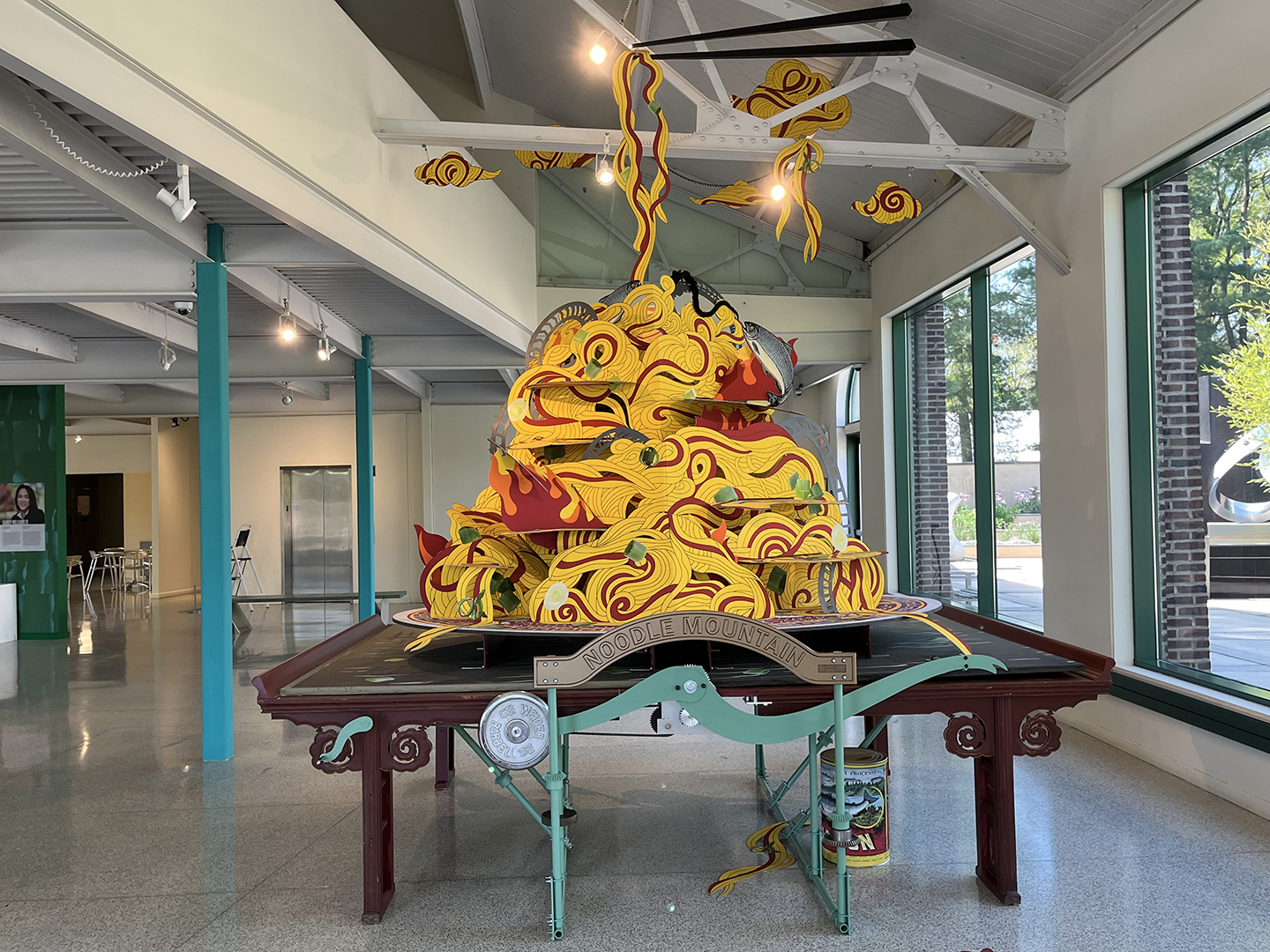
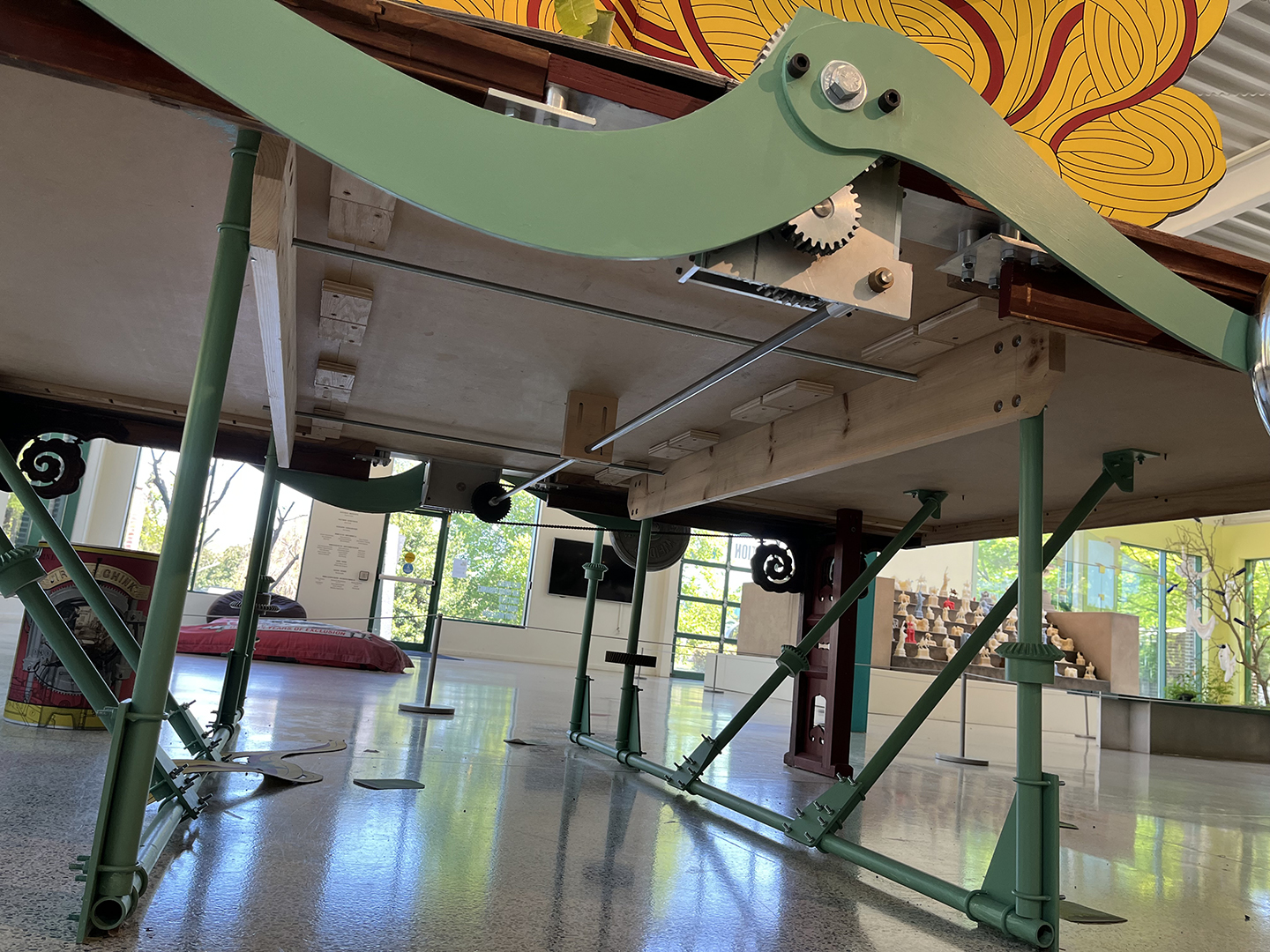
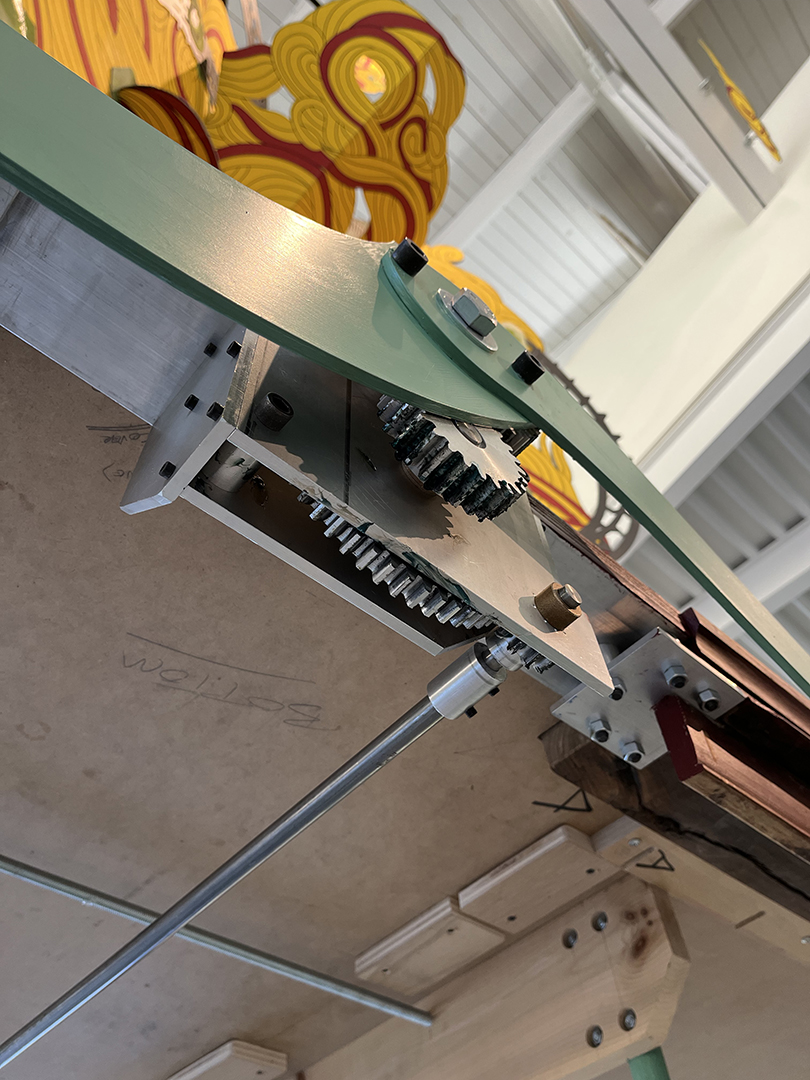
Noodle Mountain. 2024

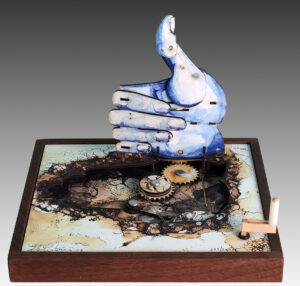
Noodle Mountain” is a kinetic collaboration between Colette Fu and myself. She is a brilliant and inspired pop-up book artist, designer and photographer. We’ve done several projects together, and this one is my favorite, so far. The theme of the work is an homage to Chinese and Chinese American contributions to American culture. For more about this piece, and Colette’s work, please visit http://www.ColetteFu.com


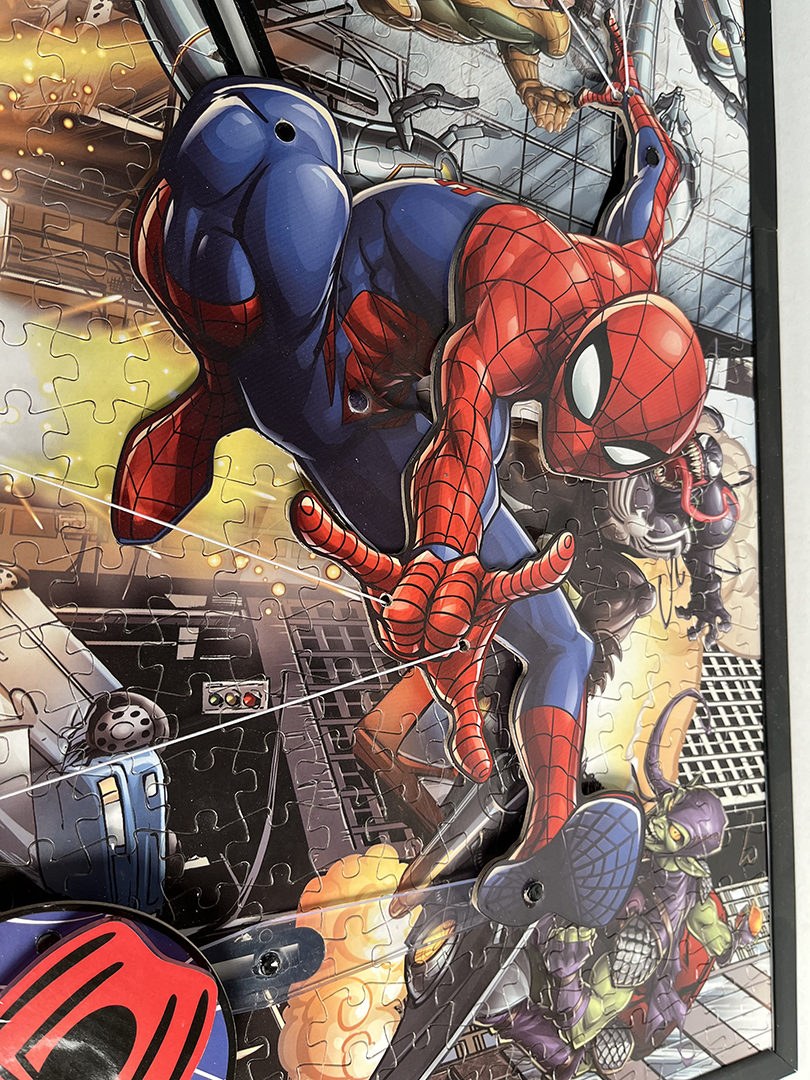
Spiderman. 2024
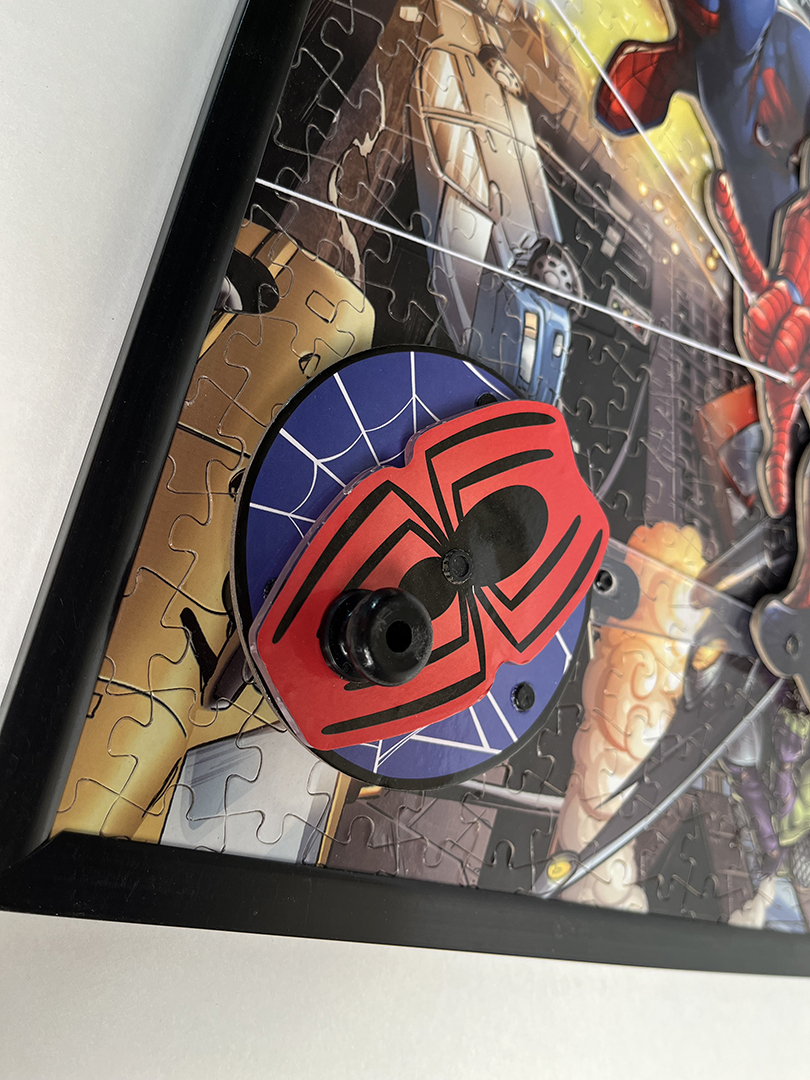
Developed in collaboration with Fantasma Toys, this is one of three initial designs of an animated jigsaw puzzle. The background image is the jigsaw puzzle. After putting that together, you add a handful of plastic parts on top that move, when you turn the hand crank. Fantasma Toys, including this one, are available wherever toys and games are sold. For more info, visit Fantasma Toys.


Cyclovane. 2022
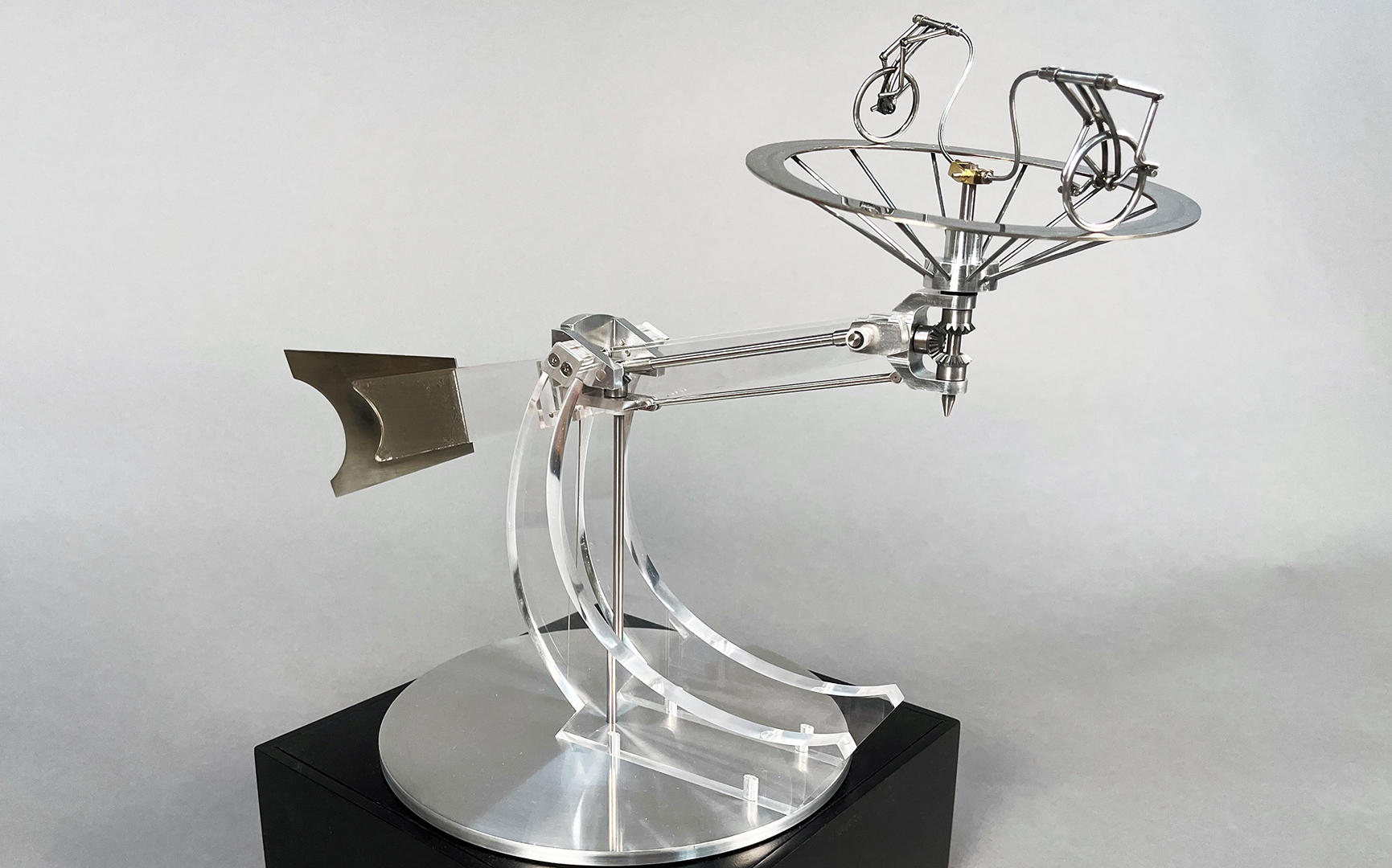
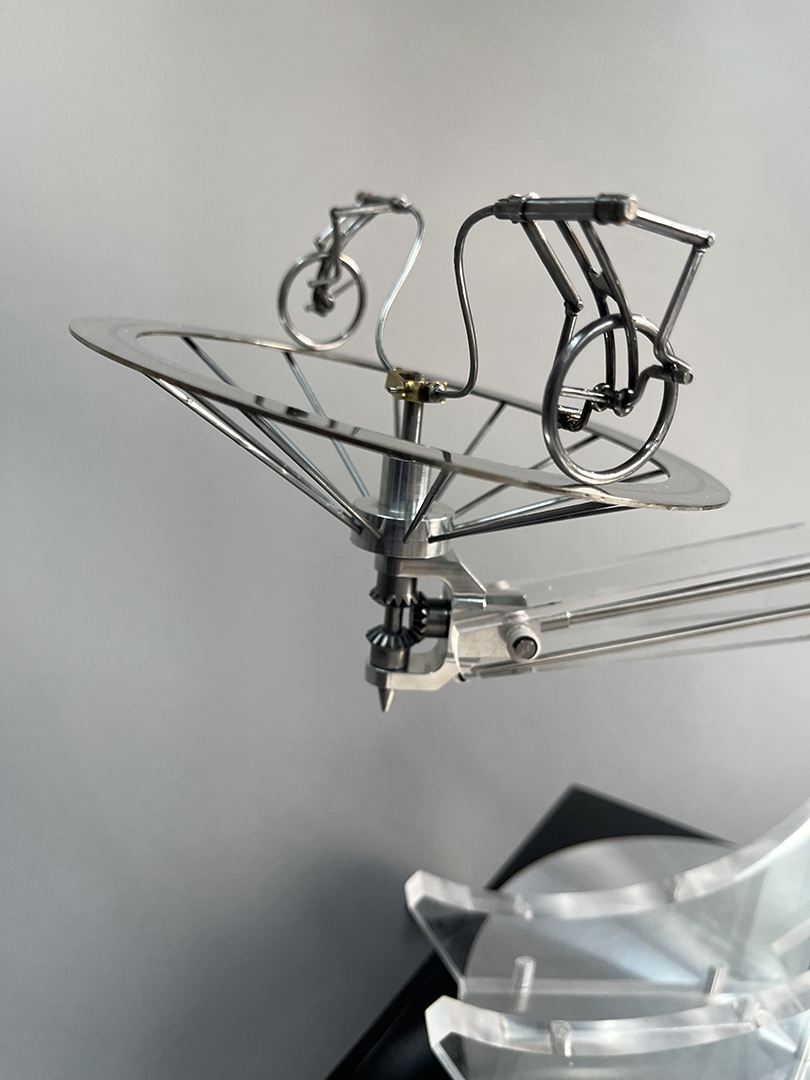
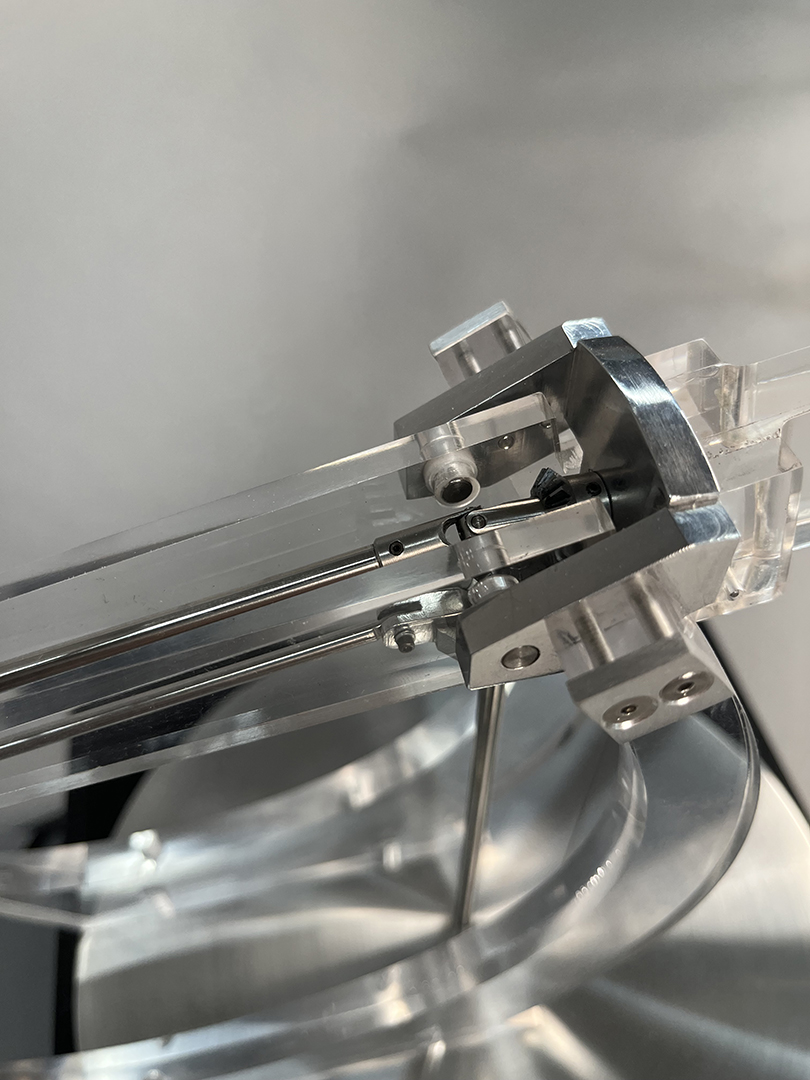
This piece was commissioned by a dear old friend and classmate from elementary school! It features a common theme seen in several of my earlier works: two cycling apparitions, permanently tethered to each other, circulating an undulating track in the air. The track rhythmically rises and falls as the beam supporting it gently oscillates. All are rotating on a clear acrylic pylon mounted on a polished aluminum disc.
Approx. 18″ Diameter x 14″ High. Wood, Metal, Plastic, Electrical.


Large Tetra-Cycling. 2021
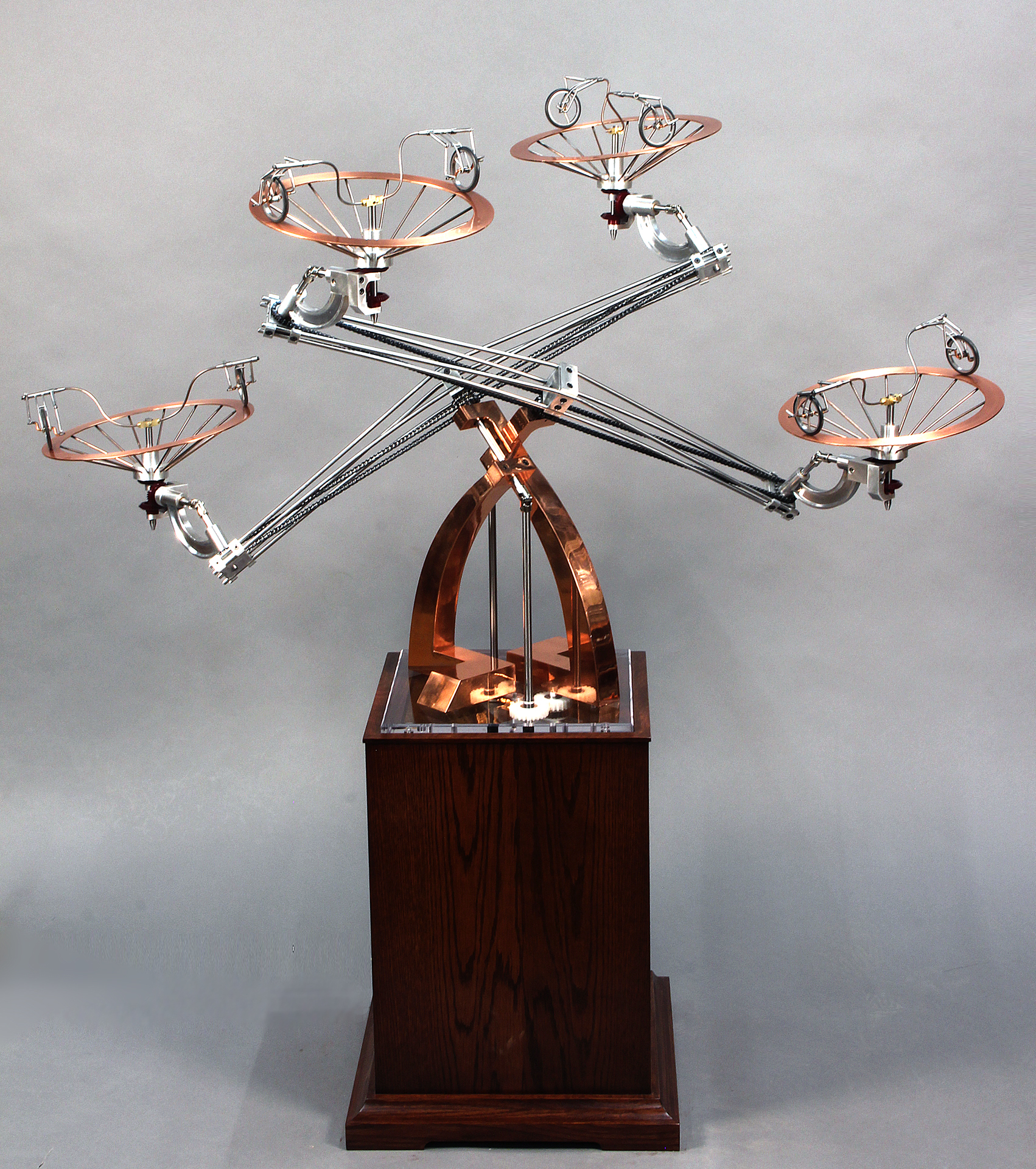
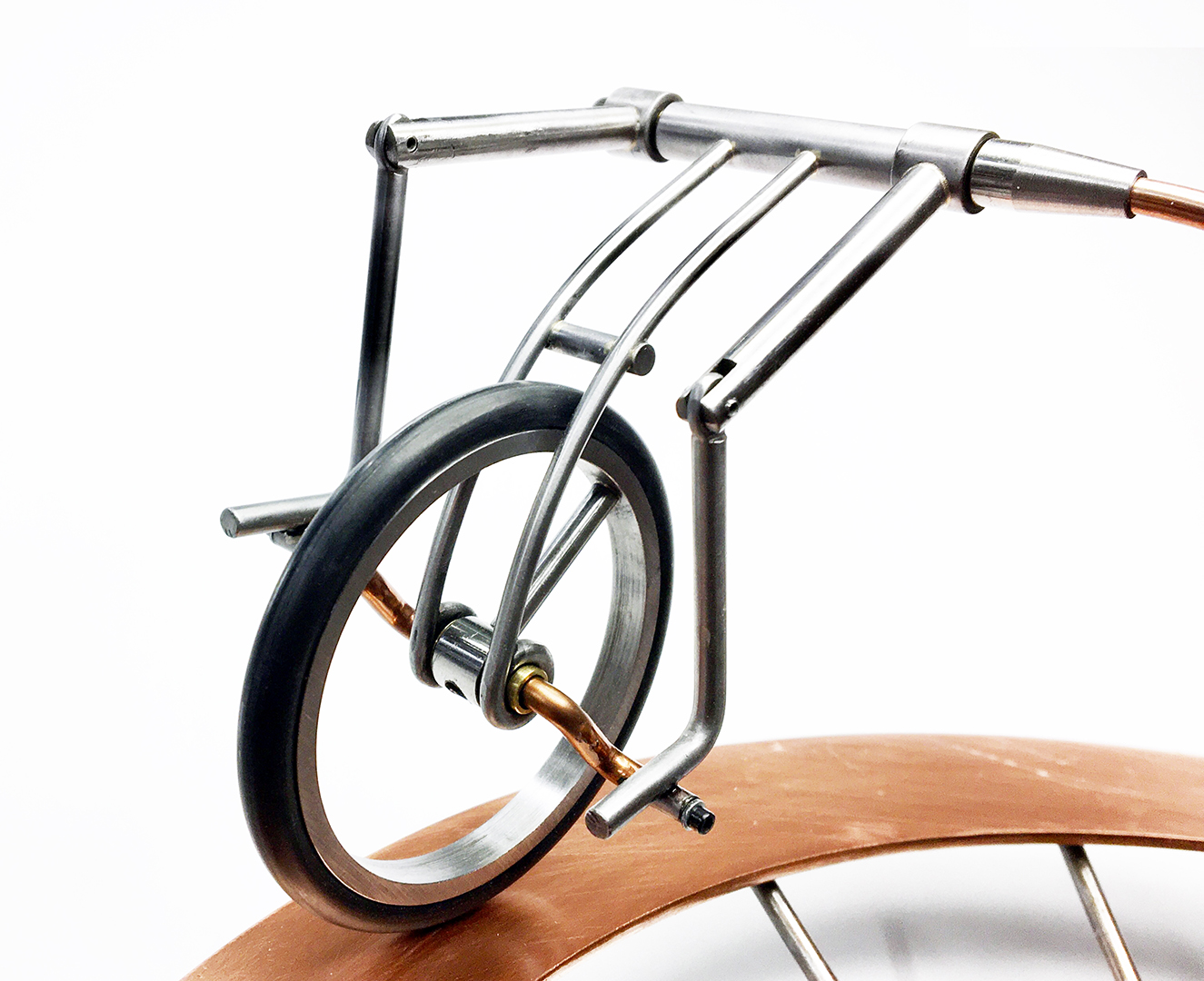
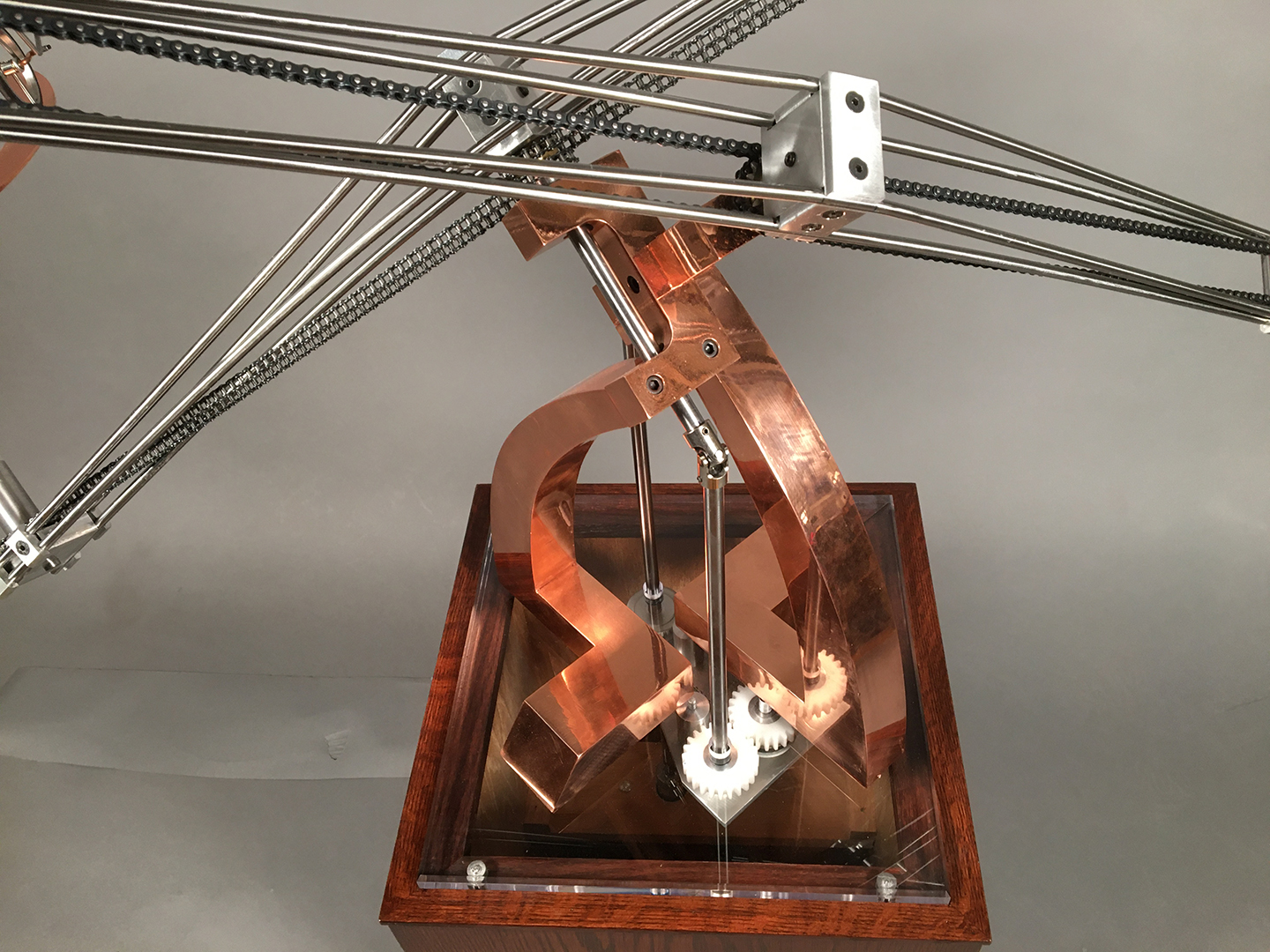
Subtitled “Now is the Time to Make Circles with Mints,” this cyclical work executes its motions along multiple axes, with the intention of capturing the eye’s attention, and ideally provoking one’s imagination into a vicarious, whimsical journey of trans-dimensional reverie.  For the dimensionally challenged, some solace may be derived in the knowledge that despite the obvious perils of endless circumnavigation, thoughtful provisions have been secured for the riders’ eternal equanimity.

Note: The original “Tetra-Cycling,” exactly one-half the size of this work, made in 2008, was acquired by the late, celebrated composer, James Horner. It seemed a shame it would not likely be seen again. This work, in part, stands in tribute to James, with great appreciation of his enthusiasm for kinetic sculpture.


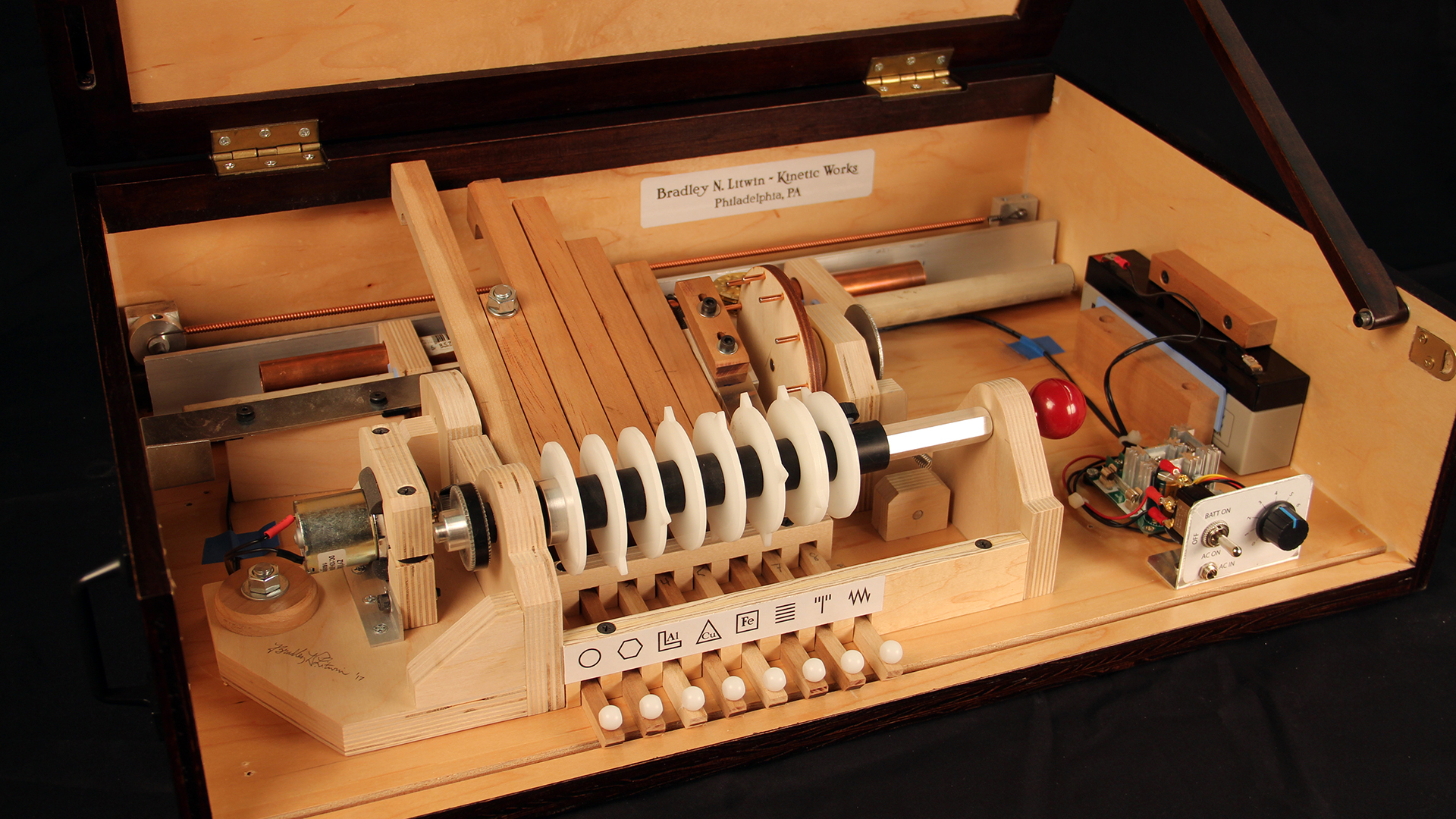
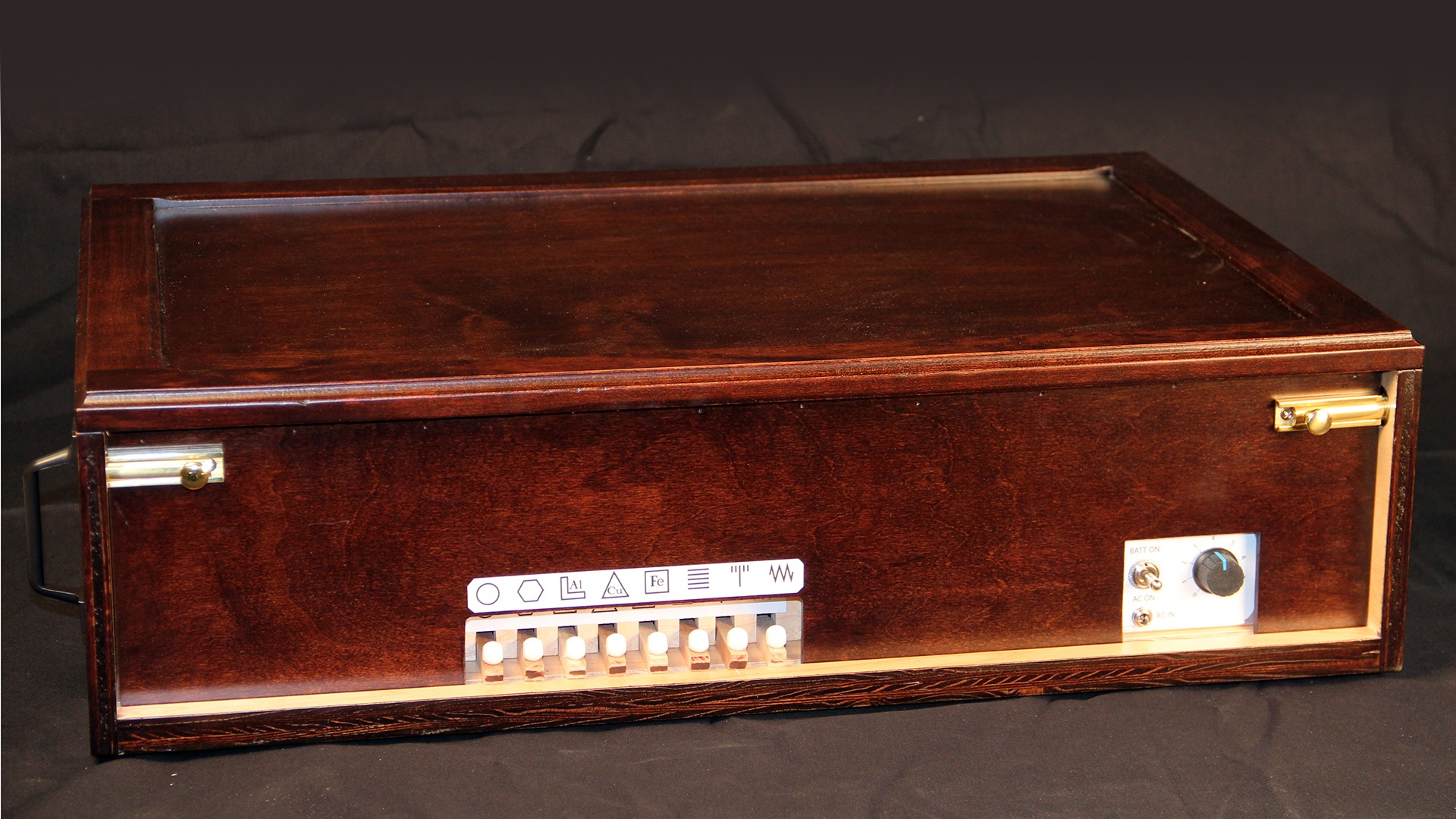
Mechanically Programmable Rhythm Generator. 2020
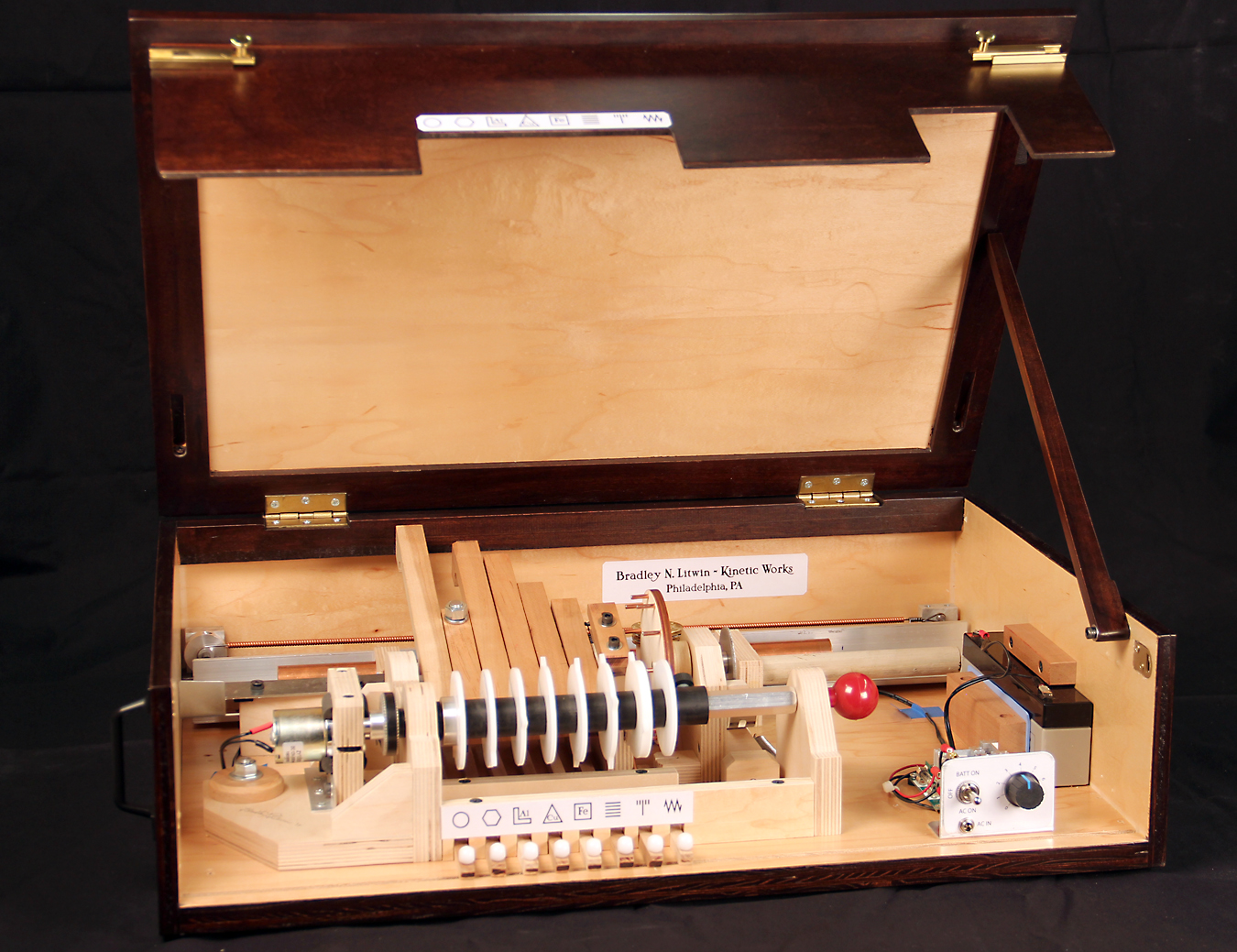
Jazz pianist and composer, Chris Walters, commissioned this device to augment his forays into new musical territories. The machine has 8 different voices, consisting of 2 metal pipes, a bass piano string, a piece of steel hardware, an aluminum angle, tambourine cymbals, a spring “Boing,” and a scratchy noise-maker. Powered by a near-silent gearmotor, the player is able to adjust tempo. The instrument voices are percussed by a variety of interchangeable timing cams. And, which sounds are active is set by stop levers, thereby accommodating a huge variety of possibilities, for both composition purposes, as well as live performances.
Size: 22″ x 14″ x 6″


Clapper 15. 2020

 Mechanical audience proxies date back to the late 1940s, when Bing Crosby incorporated pre-recorded laughter in his radio shows.  The “Laugh Track” machine, first heard in a 1950 television show, set a further precedent for this artifice, which persisted into the 1970s.  The machine not only provided an artificial response to the presentation, it became an actual component of the production, employed as a “sweetener.” For example, it could augment the apparent amusement of an audience, when jokes might otherwise fall flat.  This work seeks to extend the concept set down by this peculiar practice.  That is, if the behavior of a living audience is insufficient to satisfy theatrical expectations, why stop at verisimilitude? Clapper 15 is the real thing.  Once activated, its enthusiasm is boundless.


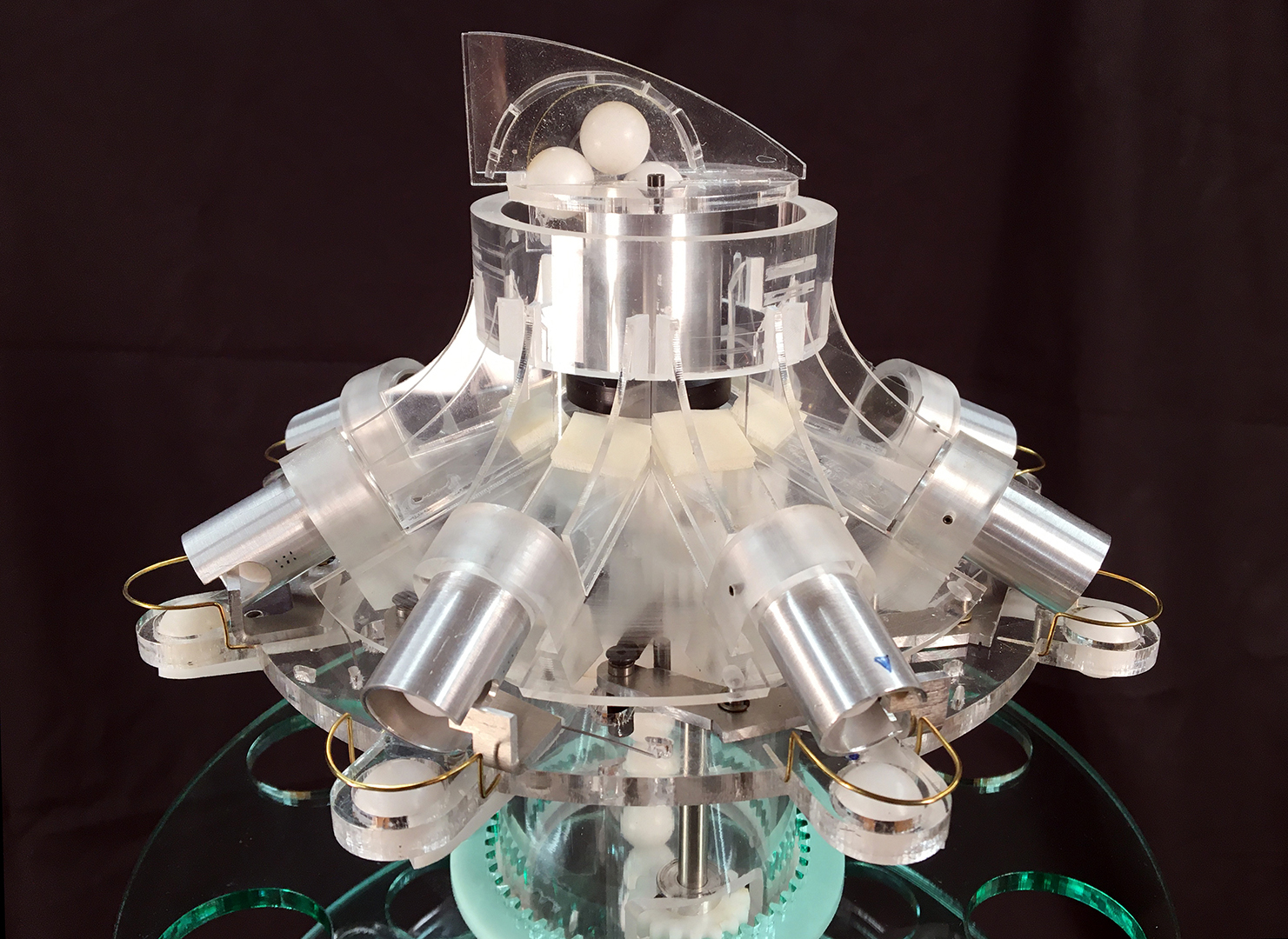
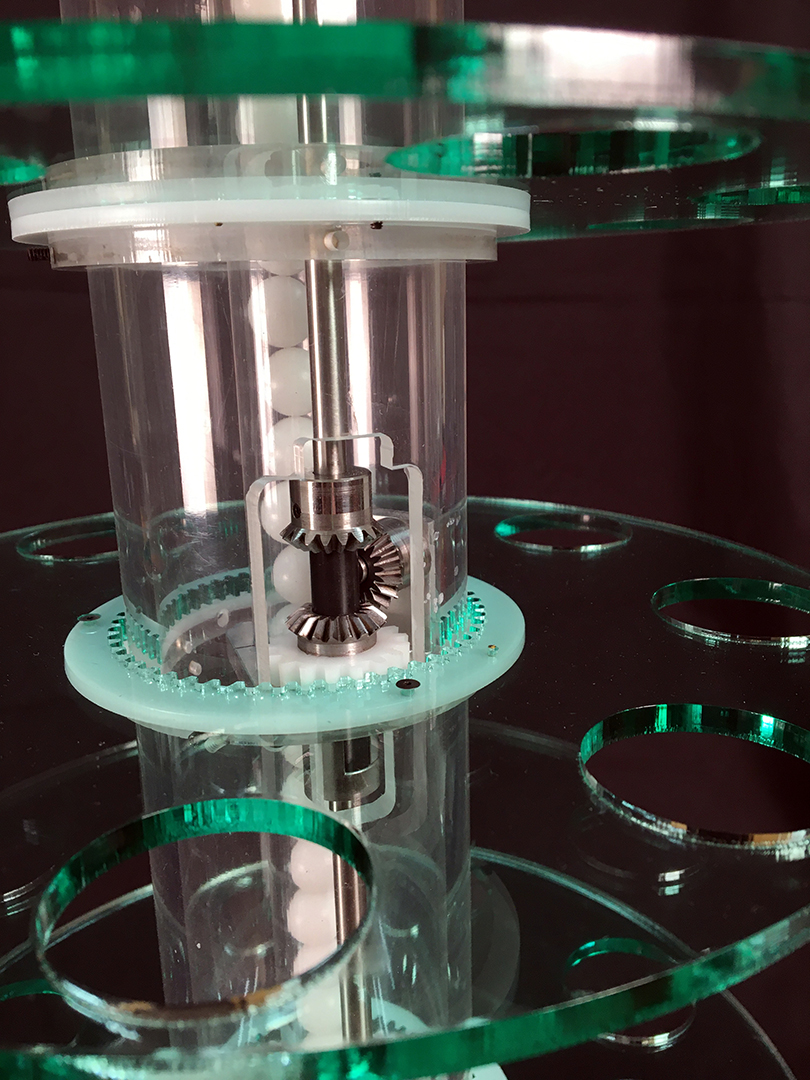
Rain. 2020

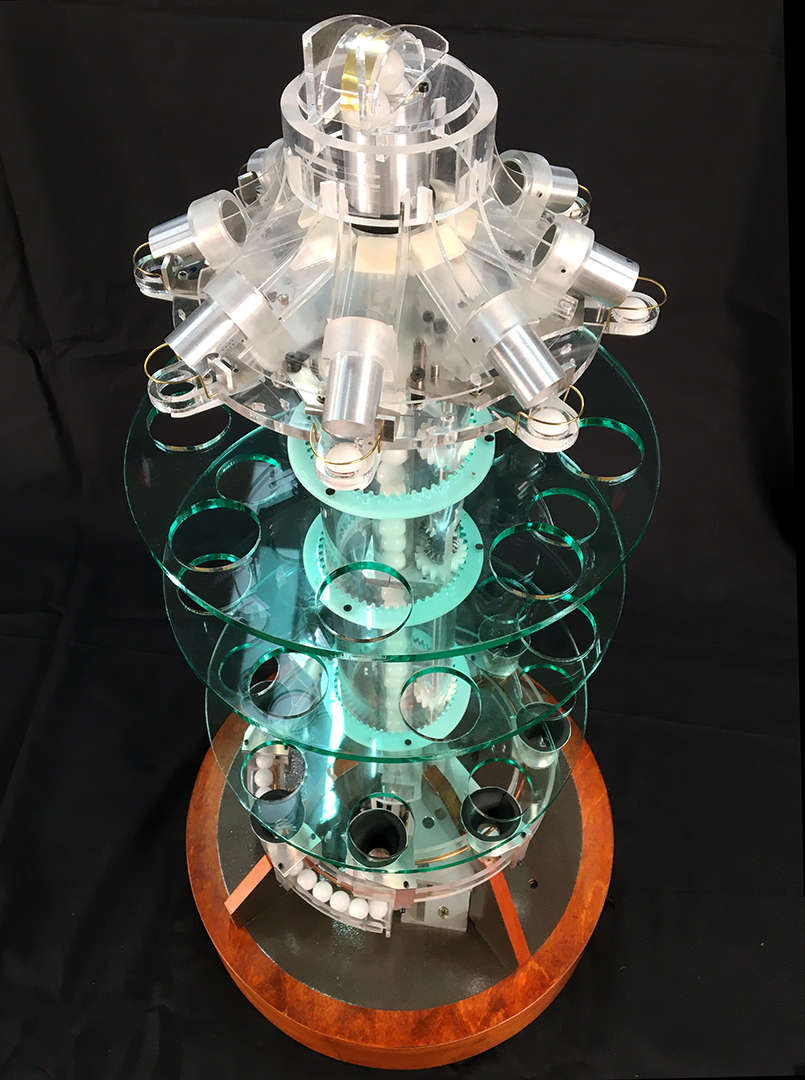
Rainstorms can evoke both a transcendental sense of release, and a simultaneous overwhelmed feeling, by the incessant rhythmic patterns of drumming drops, both the regular and random engendered within this work. The cacophony of the plastic balls striking the funnels, at a fixed rate of eight per second, abetted by the clatter of transporting these through the mechanism, mimics that of a good downpour.  A random element is integrated in this rhythm by a logistical quirk: that the balls don’t arrive for collection at perfectly uniform times.  Balls falling nearer the top of the ramp take longer to get down than those near the bottom, and occasionally, a ball descending the ramp blocks another one from exiting the bottom of the funnel.  Thus, groups of balls tend to form clumps, before entering the impeller wheel, causing intermittent gaps in their distribution, above.


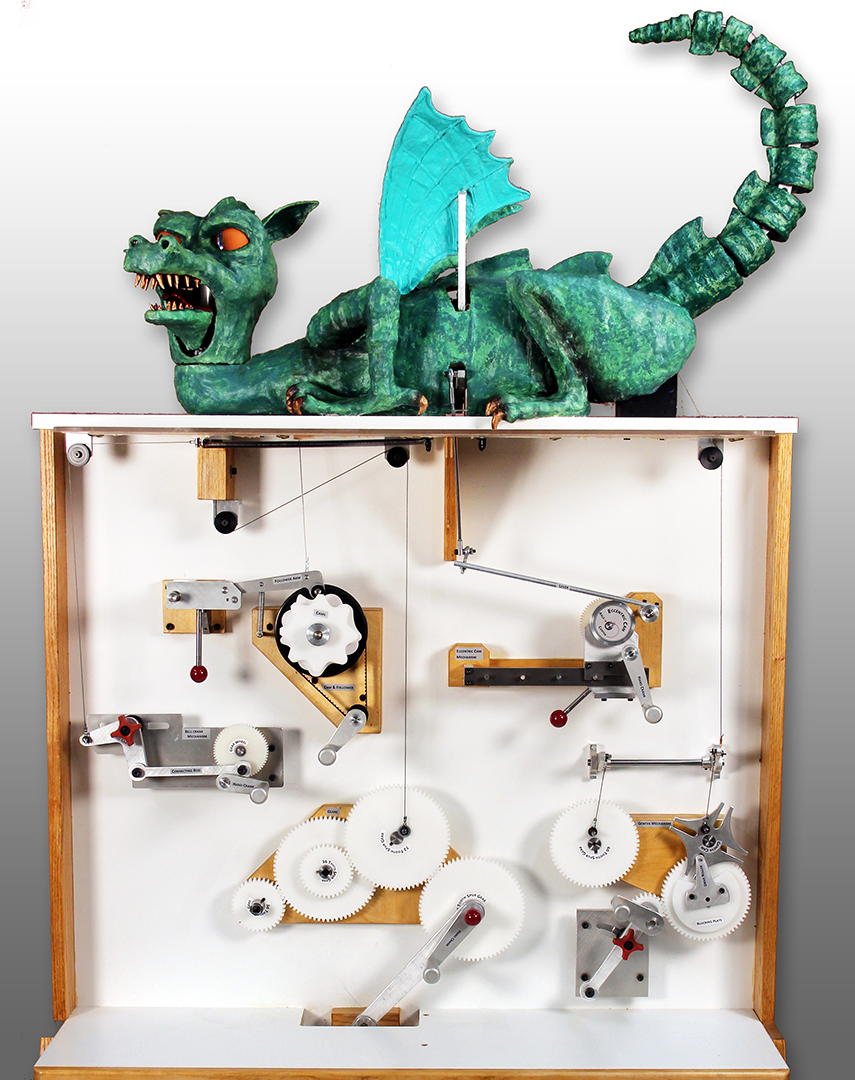
S.T.E.A.M Dragon – Educational Exhibit. 2020
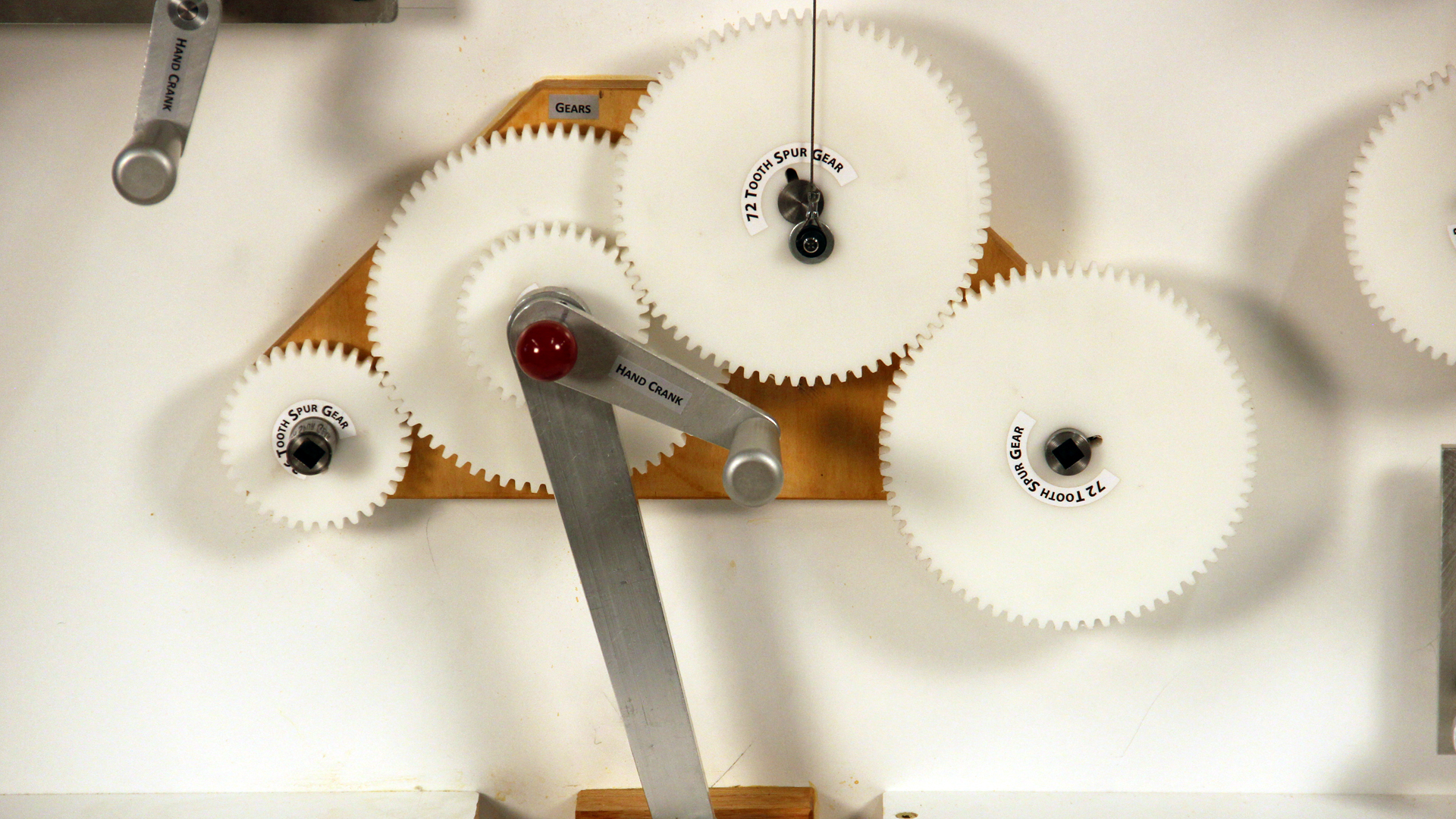
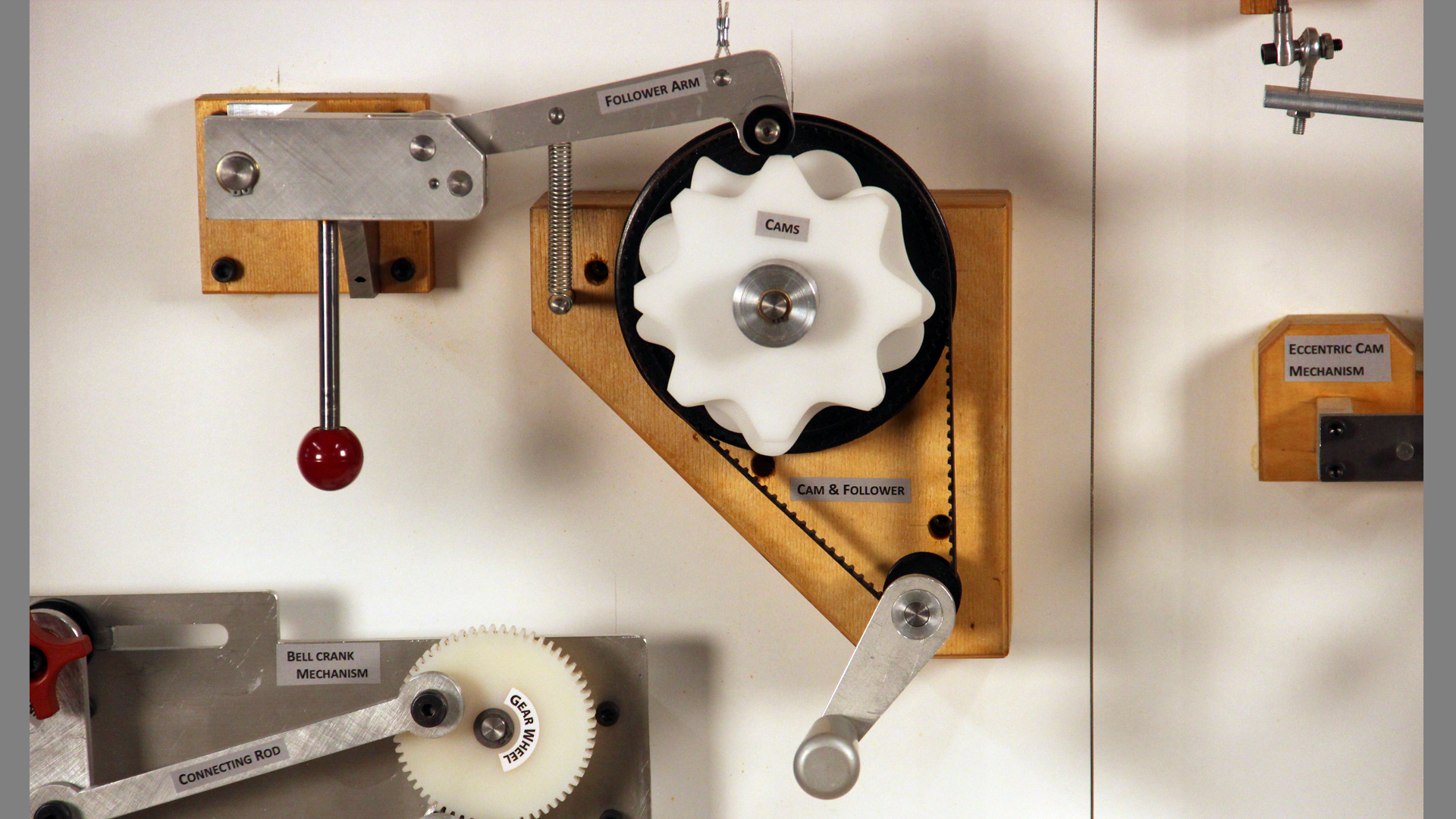
This interactive kinetic work was commissioned by the Morris Museum, in Morristown, NJ, as an educational outreach project, offered as enrichment for middle school STEAM programs. Each of the mechanisms on the lower panel section controls an animated feature of the dragon puppet. www.MorrisMuseum.org for museum info


MechaniKits™. 2017

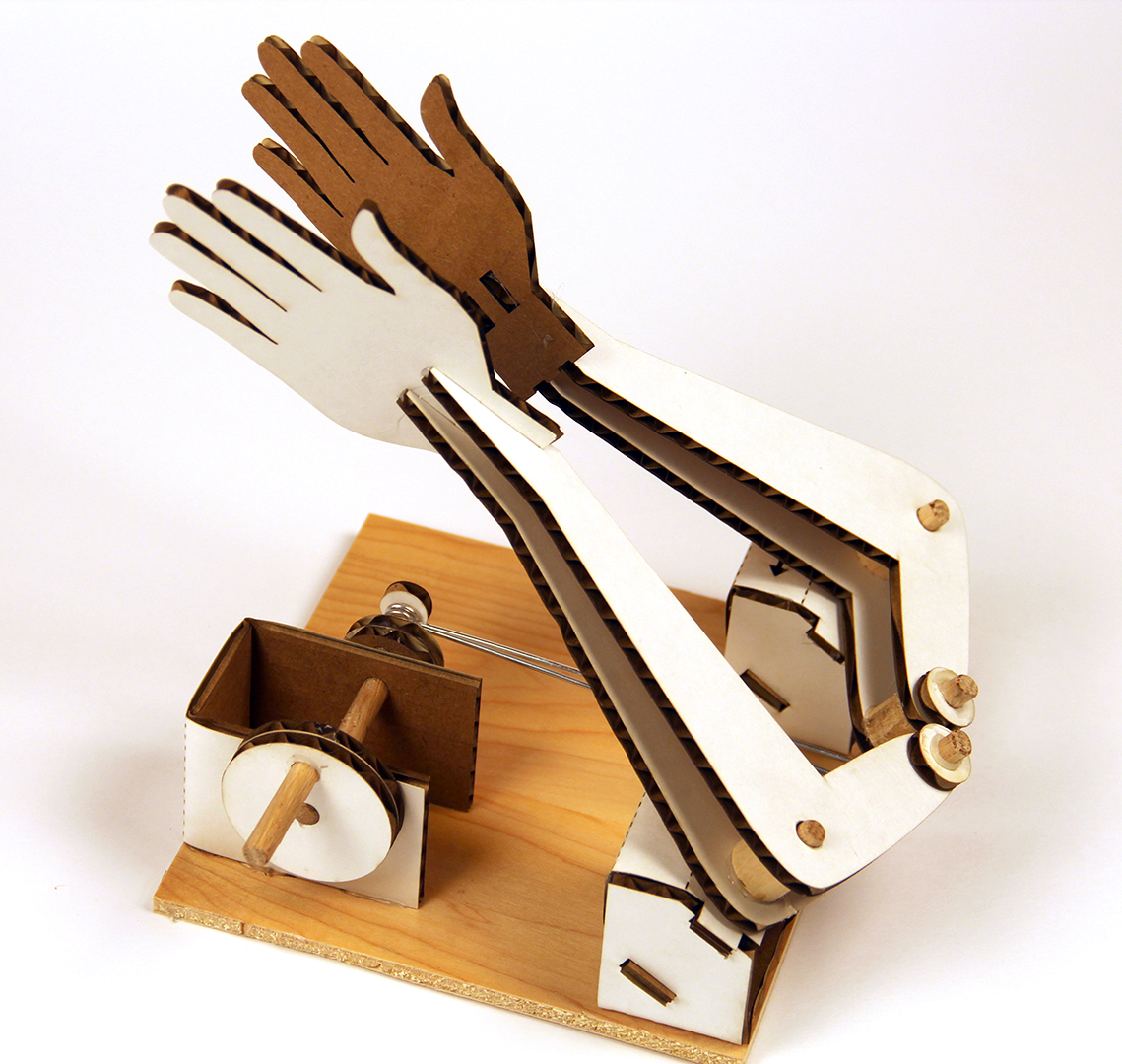
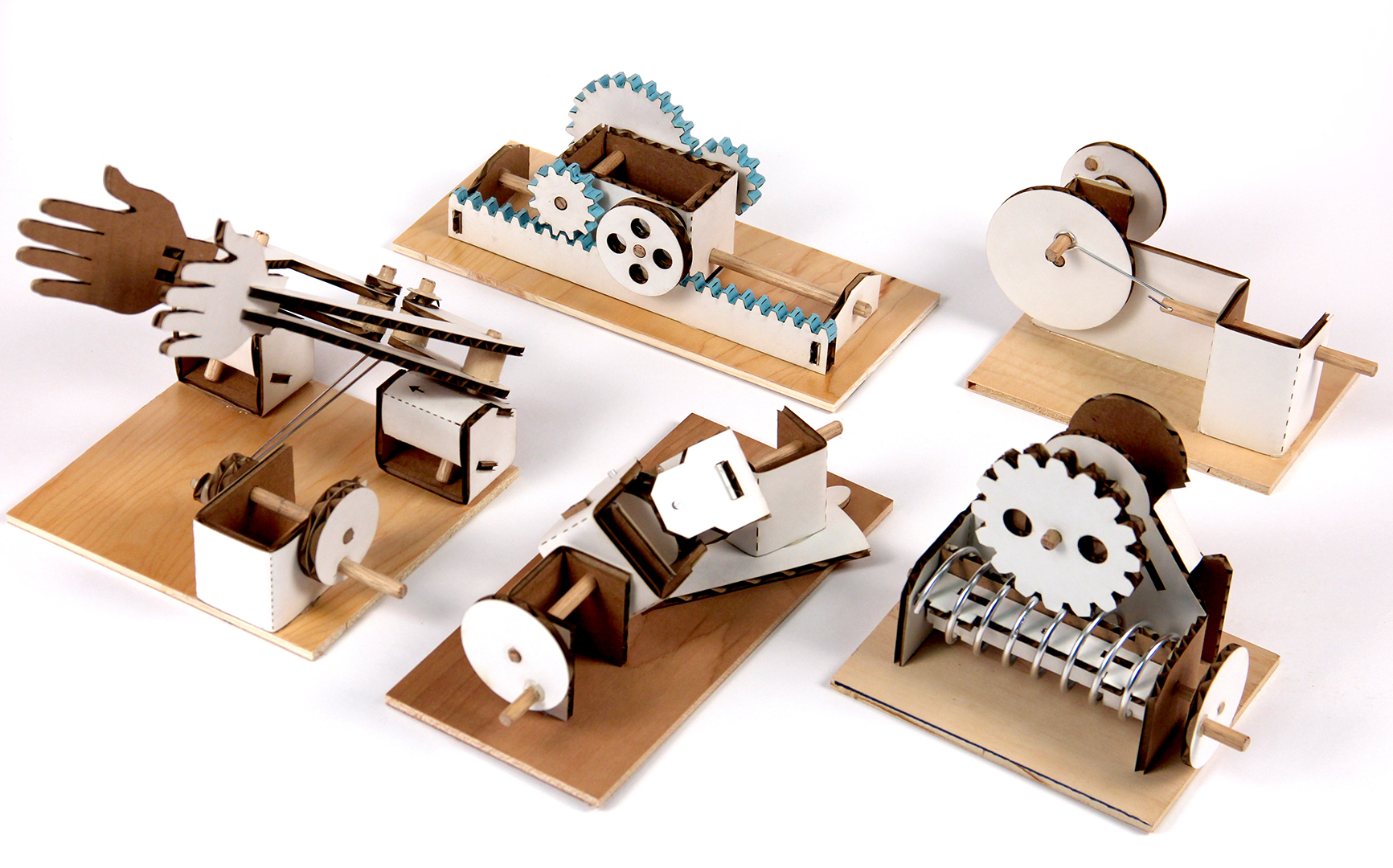
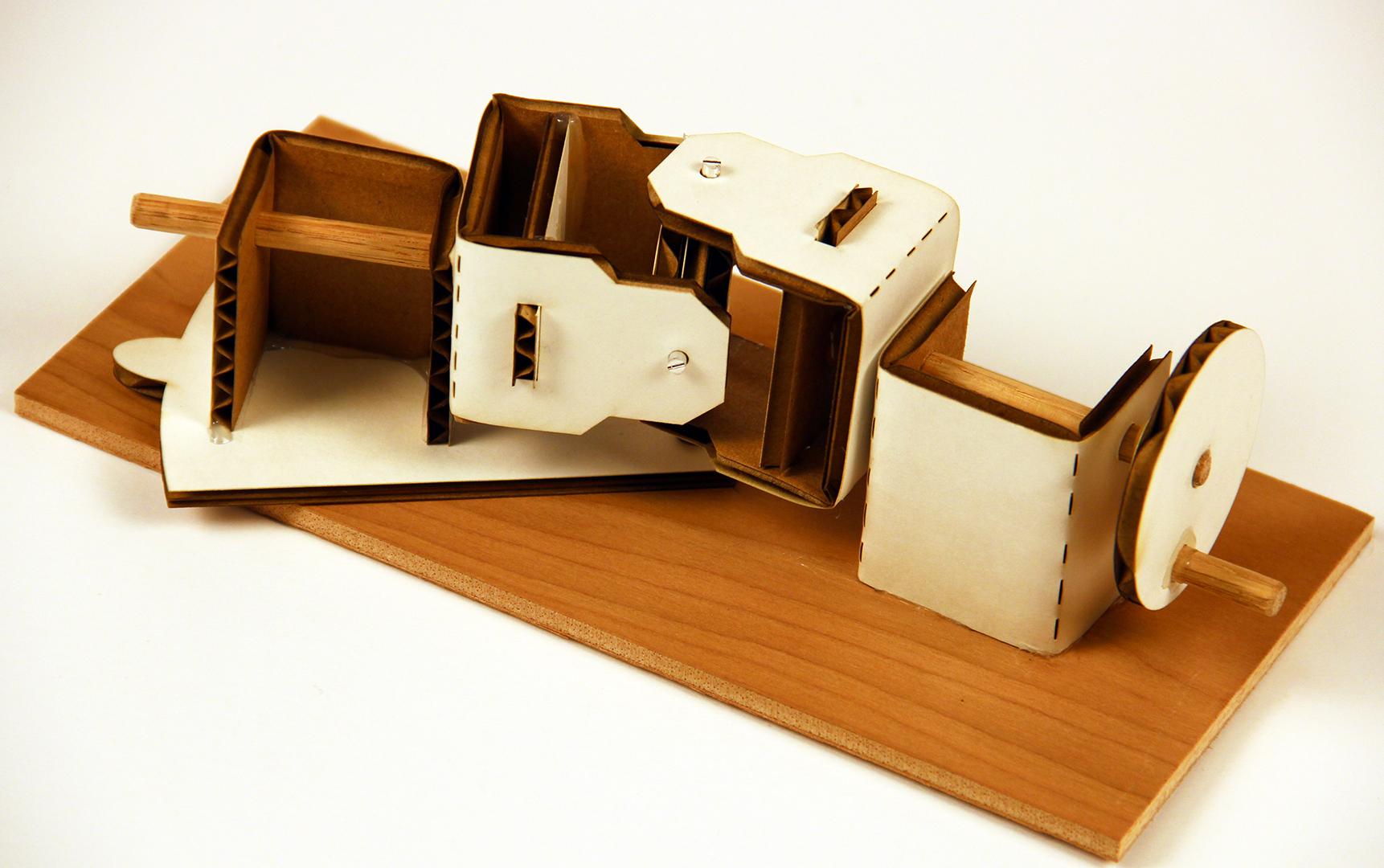
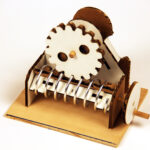
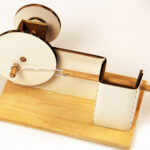
I’ve been working on making this new series of mechanism kits, especially intended for kids. They offer a hands-on exploration experience in an age when so much is otherwise a detached screen-based experience. Made mostly of corrugated cardboard and a few wooden dowels, they’re easy to assemble, and make a great activity to share with parents and friends.


The Large Sway of Public Opinion. 2017

Commissioned for the permanent art collection on display at the Pennsylvania Convention Center, in Philadelphia, this is a revisiting of “The Sway of Public Opinion,” made in 2007. the primary difference is that this newer work is twice the size – roughly 26″ diameter. Materials are wood, steel, brass, copper, aluminum, plastic, and electrical.


Slice of Light. 2018

When Lumigogo’s creative director approached me at the 2018 AutomataCon conference, saying he wanted me to design lamps for his new venture, I thought he must be kidding. But, he really meant it, and I gave it some serious thought. “A Slice of Light” is my first entry into this realm. Look for it on the shelf of your favorite fine furniture store, soon.


Birthday Zoestrobe. 2015

This is a build-it-yourself kinetic sculpture birthday card. Originally made to be a present for fellow kinetic sculptor, Arthur Ganson. All the parts, except two brass axles, are laser cut from a single 8-½ x 11” sheet of laminated illustration board.


Ultimate Self-Help Book. 2014

Commissioned by a group of library science and literary technology enthusiasts in Edinborough, Scotland. The piece integrates a borrowed design from the MechaniCards® series into the pages of a conventional book, perhaps lampooning the hybridization of media


Neo-Pangea Surprise Box. 2012

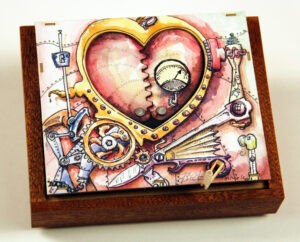
This is a collaborative commission done for Neo-Pangea, a marketing media company in Reading, Pennsylvania. The mechanical design and production were done in my workshop, and the illustrations were provided by the wonderful artists at Neo-Pangea. The audio, “Did You Ever See A Dream Walking,” features crooner Gene Austin, from a 1933 recording that emanates from an electronic sound module, inside the box; triggered when the lid opens.


Roche Animated Graph Machine. 2011

This is a custom MechaniCard® design, commissioned by Roche Diagnostic Laboratories, intended as an educational device, distributed to doctors. Turning the crank causes the data points to populate the field, which plots the progression in time for three types of papilloma virus, with a likely diagnosis of cervical cancer.


The Large Radial Engine. 2011

46″ x 40″ kinetic wall piece, originally made as a display for a trade show. wood, foam core, plastic, electrical. Except being powered by motor, rather than hand-crank, this piece is nearly identical with the Radial Engine MechaniCard®. The piece is currently available for purchase.


The Large Ambigulator. 2011

46″ x 40″ kinetic wall piece, originally made as a display for a trade show. wood, foam core, plastic, electrical. Except being powered by motor, rather than hand-crank, this piece is nearly identical with the Ambigulator MechaniCard®. The piece is currently available for purchase.


QuadRotapult. 2010

For those who’ve wondered if it was really possible that this piece does what it looks like. Thanks to the slow motion video capability of my new phone, you can see clearly what’s going on with the QuadRotapult.


Desktop Tracker-Rocker. 2010

Motion Becomes Memory

Bradley Litwin’s Desktop Tracker Rocker is a small, hypnotic machine—part sculpture, part performance—that stages a ritual of mechanical entrainment. A brass ball rolls inside a suspended circular track, itself cradled between two pairs of machined, crystal acrylic pylons with a pair of reciprocating arms The arms rock the ring in a uniform, rhythmic motion.

When first set up, the ball rolls hesitantly; then predictably. Eventually, it achieves full circulation—sweeping around the interior of the ring in smooth synchronization. It’s not being controlled; it’s being taught, settling into a mesmerizing, closed choreography.

There’s no sensor, no mind behind it—just mechanics, time, and physical logic. Yet the result feels nearly animate. The clear acrylic supports lend the piece a floating quality, emphasizing the transparency of its method. Nothing is hidden; the magic is structural.

In its refined simplicity, Desktop Tracker Rocker becomes a study in learned motion—how a system, through sheer repetition, can bring an object into patterned behavior. It’s at once playful and contemplative, evoking themes of habit, influence, and resonance.


MechaniCards® 2010

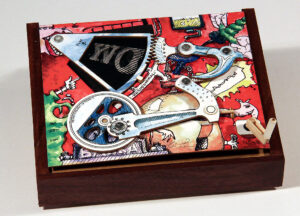
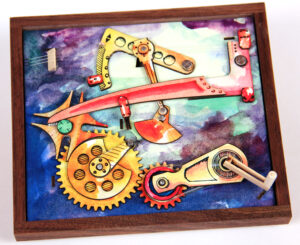
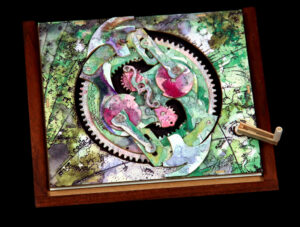
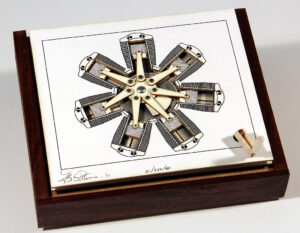
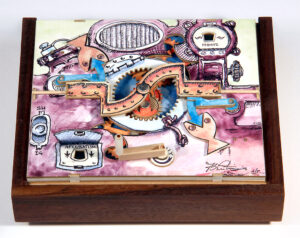
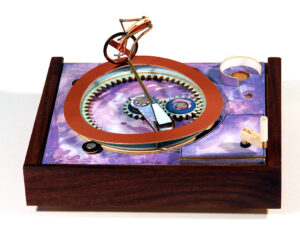
MechaniCards® are miniature, hand-operated kinetic sculptures, designed and produced in limited edition by Philadelphia artist Bradley N. Litwin. Each one is handmade, numbered and signed. Primarily constructed from aircraft plywood or high density paperboard, with a few bits of metal and plastic, they make truly unique gifts for most any occasion. Each comes with instructions and display recommendations. A few are available as do-it-yourself kits.
Pluckerator. 2009

This machine produces a near infinitely variable sequence of rhythmic melody on only four strings.


Buiild-A-Tune, 2008

Commissioned by the DuPage Children’s Museum in Naperville, Illinois. Turning a hand crank rotates the spindle of a cylinder, which is populated by various protruding nubs. The nubs pluck corresponding musical tines, as they go around, much the same as a traditional music box mechanism. The device includes a variety of interchangeable disks, each with different arrangements of nubs, offering an enormous variety for possible combinations of melodies and rhythms produced.


Stairstep Fountain. 2008

A rendering for a proposed collaboration with a company that manufactures large scale water pumping equipment for power generation.
.


Sway of Public Opinion. 2007

This is the original The Sway of Public Opinion, in which is offered a biting mechanical allegory disguised as charm. Six miniature cyclists appear to pedal in unison across a looping track, their legs turning dutifully, their wheels spinning with determination. But the deeper joke is this: they’re going nowhere of their own volition. The track itself moves beneath them. Their motion is entirely reactive.

The irony is exquisite. Each figure appears self-motivated, yet is locked into a choreography dictated by an unseen drive system. They don’t propel themselves forward; they are propelled by the sway of the structure that carries them. Litwin thus transforms a clever mechanical illusion into a metaphor for the herdlike drift of consensus, or the illusion of independence in a culture of systemic influence..


Rotapult. 2007

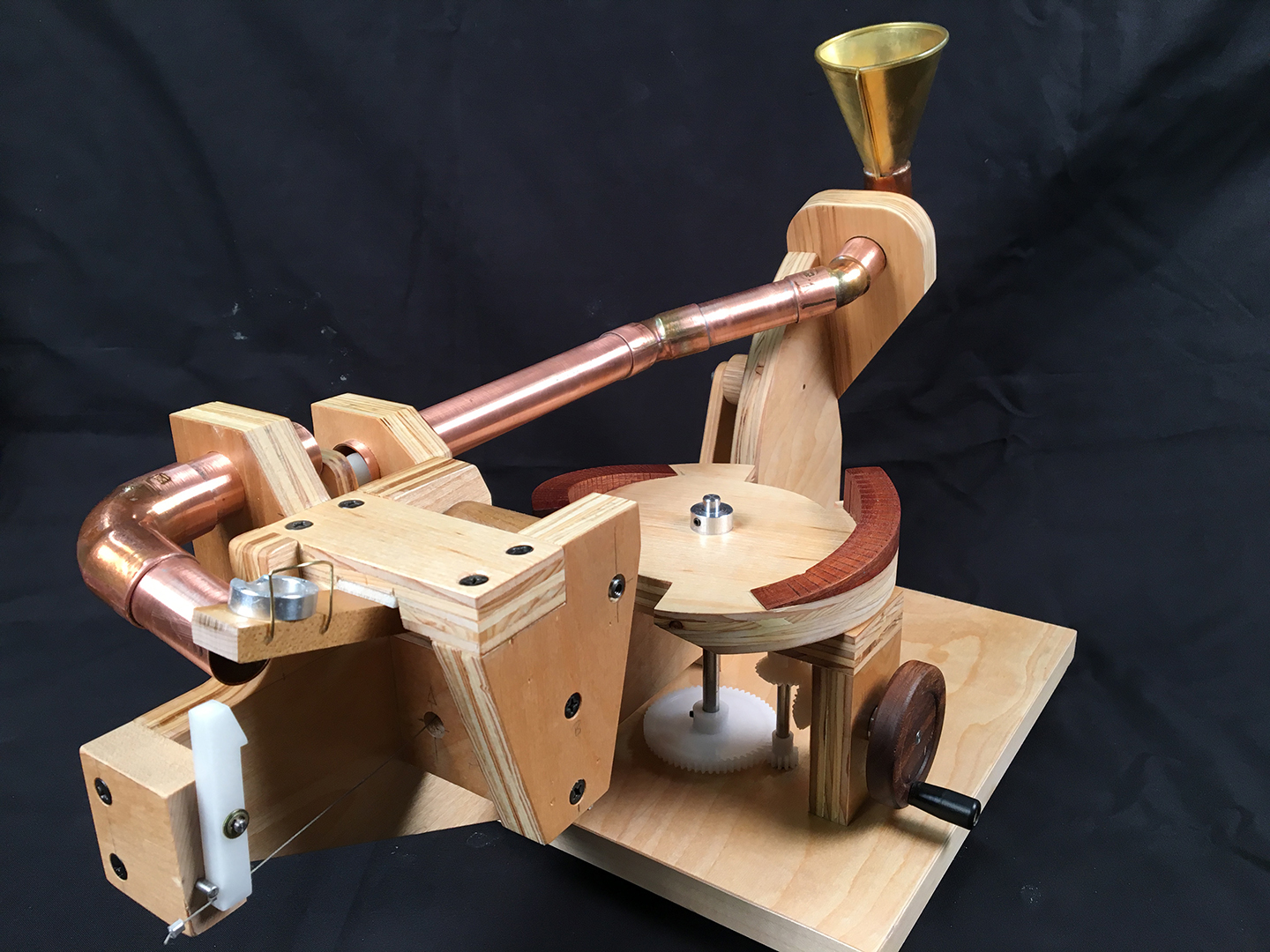
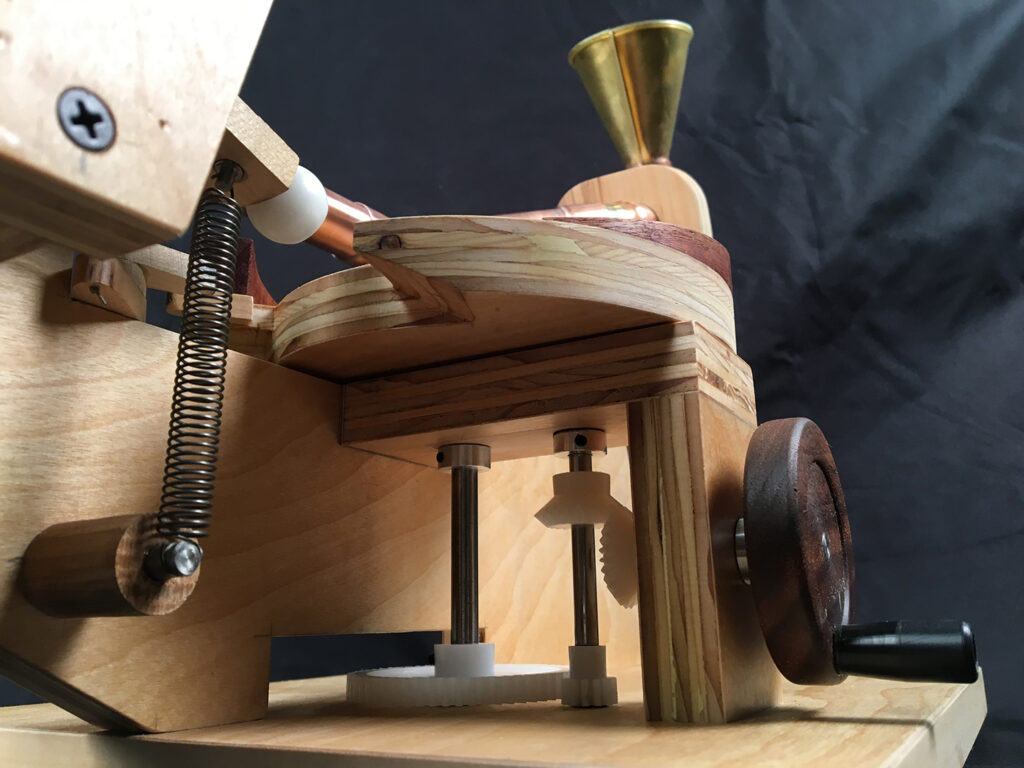
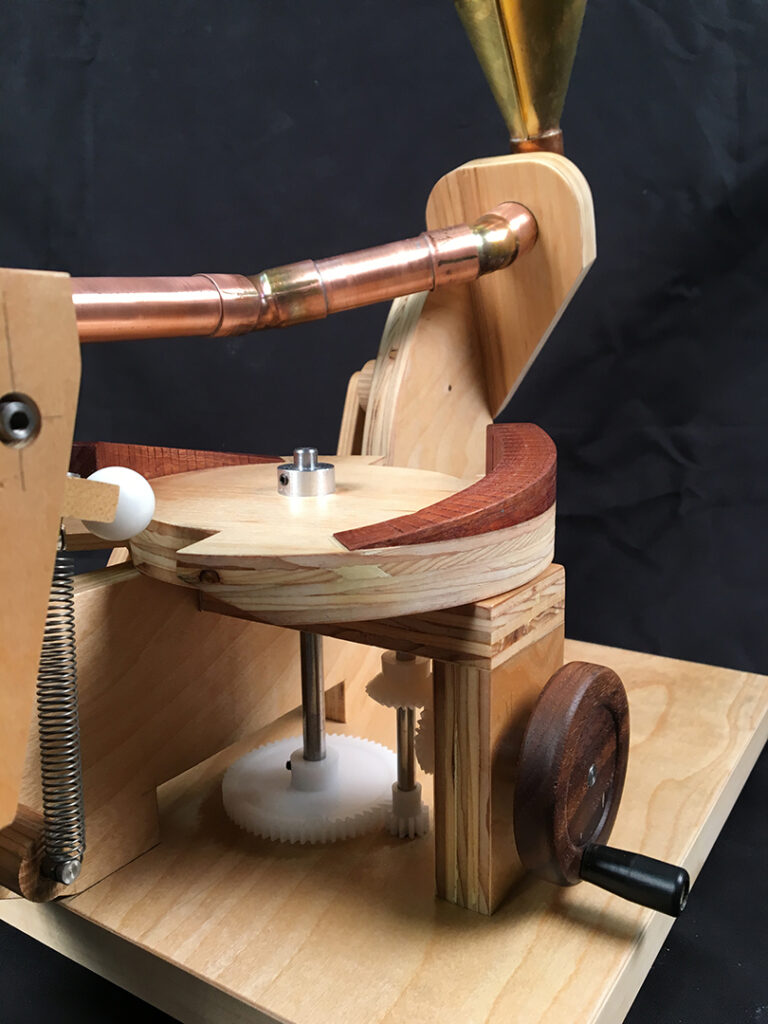
Upping the ante on what could be done with a catapulted plastic ball, this work strays into the world of physical dynamics, wherein one considers the forces at play when regarding objects in motion.  Here, the ball is not only launched four feet up in air; the catapulting mechanism is itself in continuous orbit.  The ball is captured by a brass cone, on re-entry, when the catapult carriage has progressed 180° from the launch point.


Tetra-cycling: Now is the time to make circles with mints. 2008

Now, part of a private collection, “Tetra-Cycling:now is the time to make circles with mints” is a kinetic sculpture by Bradley N. Litwin, approx. 30″ diameter x 33″ high (maximums), wood, metal and plastic.


Tracker-Rocker. 2007

The original Tracker-Rocker a kinetic sculpture of commanding scale and elegant absurdity. With its four-foot-diameter ring, supported by a minimalist frame of PVC and wood; the ring of aluminum and acrylic; powered by a ceiling fan motor. The piece performs a slow, deliberate oscillation—like a metronome built for gravity.Within the suspended ring, a single sphere rolls in response to the oscillating motion—unforced, unguided, but not ungoverned. Over time, the regular rhythm of the rocking ring draws the ball into synchronized circulation. It is not driven, but entrained—its behavior emerging from the consistency of its environment.


The Quadrapult. 2006

A minimalist reimagining of the “Octapult,” in which the number of parts has been reduced to the bare essentials. .


The Octapult. 2005

Commissioned by the parents’ association of Lower Merion Elementary School in Merion, PA as part of an artist residency in which Brad presented numerous auditorium demonstrations and  hands-on workshops. Children K through 6th grade, created drawings and prototype models, which served as inspiration for the design of this work, ultimately displayed in the school’s entrance lobby.


Ultimate Self-Help Book. 2014

The machine, if we may call it that, denies motion even as it insists upon it. Every oscillation is an apology for a stillness it never possessed. Its components—cams, levers, arms—do not move so much as they refuse to remain. The axis is not centered; it is centeredness, briefly enacted and then recanted. Viewers report that it “does something,” which is almost true. What it does is masquerade as a process. The wheels turn in the memory of torque, not in its presence. An escapement ticks not from left to right, but from doubt to coercion. Gravity is not a force here—it is a misunderstood remnant. This piece, if such language suffices, performs anti-causality in cycles. It reacts before it acts, and the effect retroactively corrects its initiator. Any impression of purpose is a side effect of your attention—withdraw it, and the work collapses into a tangle of plausible intentions.In sum: it is a terpsichore of second thoughts. The motor, if functional, only drives the point further from comprehension. It is a sculpture not of motion, but of having once considered movement and then misremembered it.